
Persian gardens on classic Iran tours offer peaceful spaces between palace visits, busy bazaars, and historic city walks. On a route through Tehran, Kashan, Yazd, Isfahan, and Shiraz, several gardens fit naturally into your journey. However, each reveals a different relationship between water, architecture, shade, and everyday life.
The main examples are Fin Garden, Dowlat Abad Garden, Chehel Sotoun, and Eram Garden. In addition, Tehran offers Golestan Palace’s garden, while Shiraz provides another rewarding stop at Narenjestan Qavam. Your final selection depends on your itinerary, interests, and available sightseeing time.
If you are comparing routes, explore our Iran tours to find a journey connecting these historic cities.
Why Include Persian Gardens in Your Iran Itinerary
Persian gardens bring another perspective to a cultural journey. Rather than focusing only on monuments, they show how people designed comfortable outdoor spaces. Water channels, planted avenues, enclosing walls, and pavilions work together within carefully arranged grounds.
Moreover, these visits help you notice connections between cities. You can compare a palace garden in Isfahan with a desert garden in Yazd. Consequently, familiar features become easier to recognize as your tour continues.
UNESCO’s The Persian Garden World Heritage property includes nine component gardens across Iran. Four particularly practical examples within these five cities are Fin, Dowlat Abad, Chehel Sotoun, and Eram. However, other historic gardens deserve attention without sharing that specific UNESCO designation.
Tehran: Begin with Golestan Palace’s Garden
A Palace Garden in the Capital
Golestan Palace provides a useful introduction to garden spaces within Iranian royal architecture. Its grounds combine planted areas and pools with richly decorated palace buildings. Therefore, the garden forms part of the palace experience rather than a separate excursion.
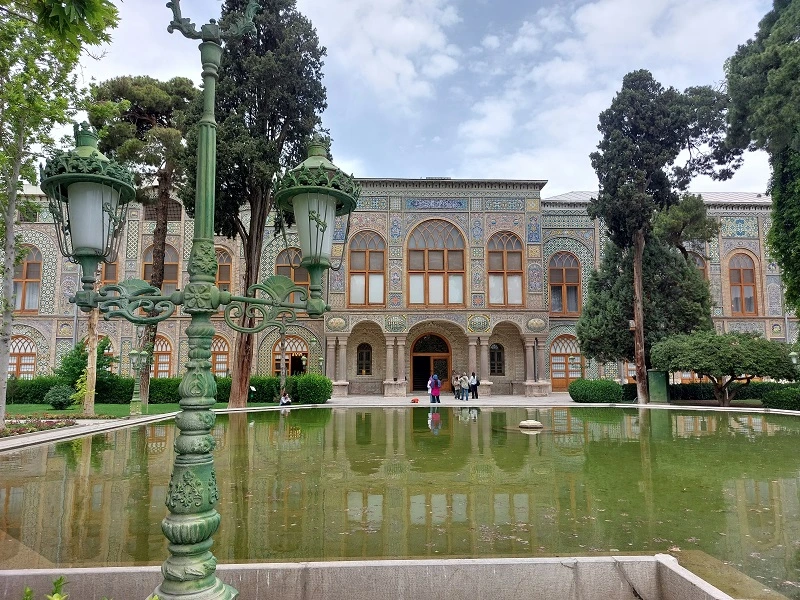
Take time to observe how the outdoor spaces connect the surrounding buildings. Meanwhile, the contrast between greenery and decorative surfaces offers different photographic subjects throughout your visit.
Golestan Palace has its own UNESCO listing. It is not one of the nine components of The Persian Garden property. This distinction helps travelers understand why different garden settings appear together on a classic itinerary.
Include the grounds within your planned palace visit. However, leave enough time for the museum sections included in your program.
Kashan: Discover Fin Garden
Water and Shade on the Classic Route
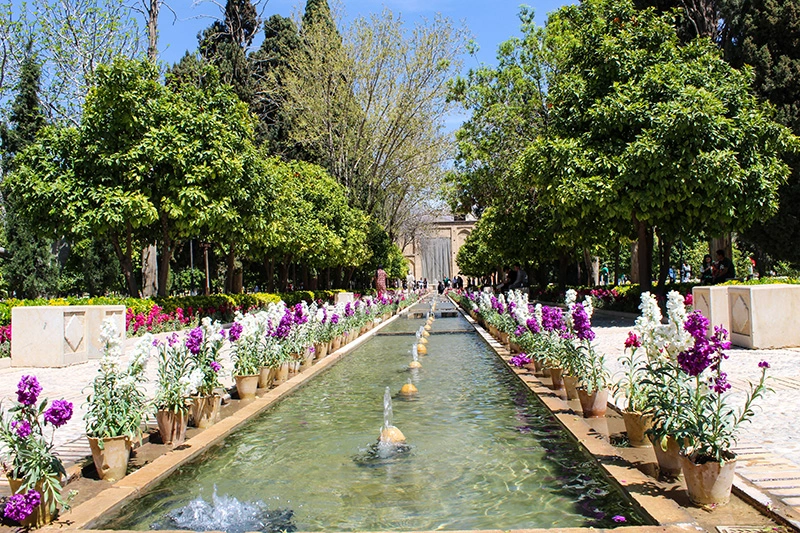
Fin Garden in Kashan is an excellent stop for understanding Persian garden design. Its formal layout brings water channels, trees, pools, and pavilions into a clearly organized space. Moreover, its shaded paths provide a different experience from Kashan’s historic houses.
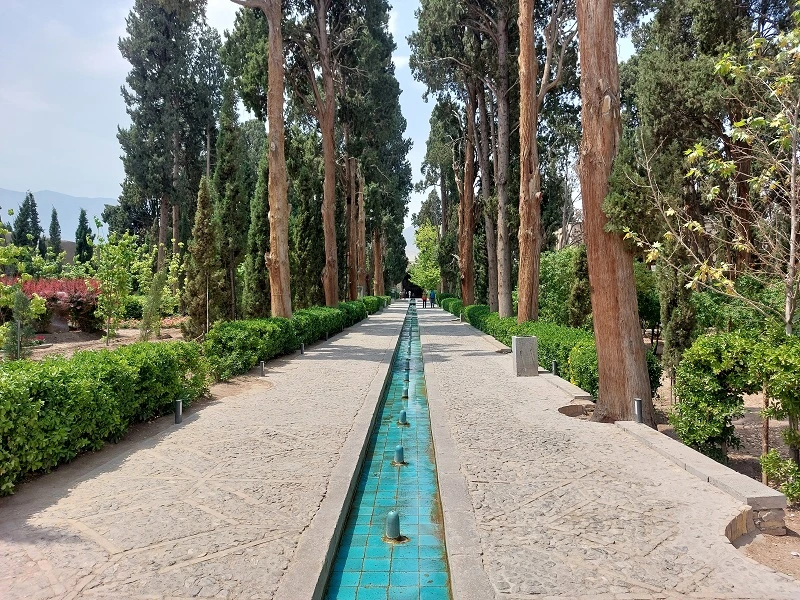
Instead of rushing directly toward the main buildings, follow the water through the grounds. Notice how channels guide your eye and connect different sections. As a result, the garden becomes easier to understand as a complete design.
Fin works well alongside Kashan’s traditional houses and other city attractions. However, it needs its own sightseeing stop rather than a quick glance between transfers.
For an unhurried visit, ask your guide to explain the garden before exploring independently. Then, walk the side paths as well as the main axis. This approach gives you both historical context and time to enjoy the setting.
Yazd: Visit Dowlat Abad Garden
A Garden Shaped by the Desert Climate
Dowlat Abad, also spelled Dolat Abad, offers a memorable contrast with Yazd’s earthen streets. Its long pool and planted grounds lead toward a pavilion crowned by a prominent windcatcher. Here, garden design and traditional architecture belong to the same story.
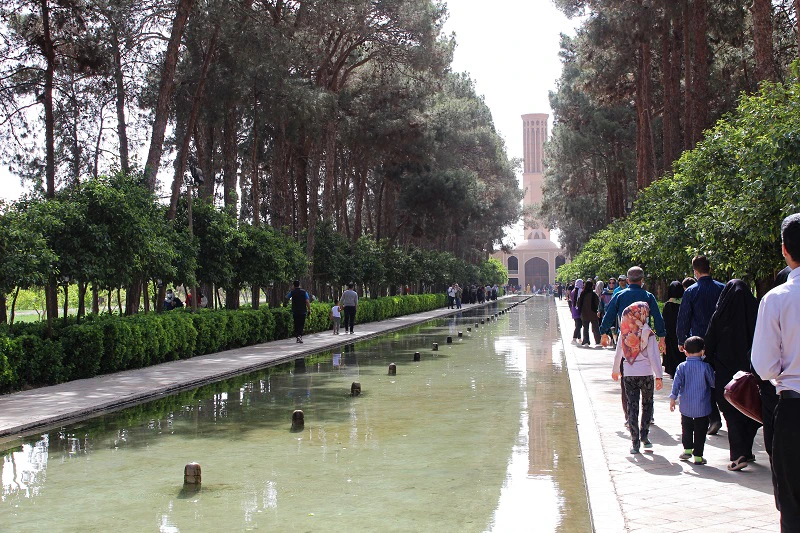
The windcatcher makes this stop especially interesting for travelers curious about climate-conscious building. Moreover, the relationship between water, shade, and airflow encourages you to look beyond decoration.
Visit the pavilion areas that are accessible during your tour. Then, step outside and compare the building with the garden’s overall layout. From different viewpoints, you can appreciate how the structure anchors the grounds.
Dowlat Abad pairs naturally with a day exploring Yazd’s historic neighborhoods. However, allow a separate transfer and a proper visit. It deserves more attention than a brief photograph before returning to your hotel.
Isfahan: Explore Chehel Sotoun
A Royal Pavilion within a Garden
Chehel Sotoun combines a Safavid palace pavilion with formal garden grounds. Its long reflecting pool creates a strong approach toward the columned entrance. Meanwhile, the surrounding trees frame the building and soften the palace setting.
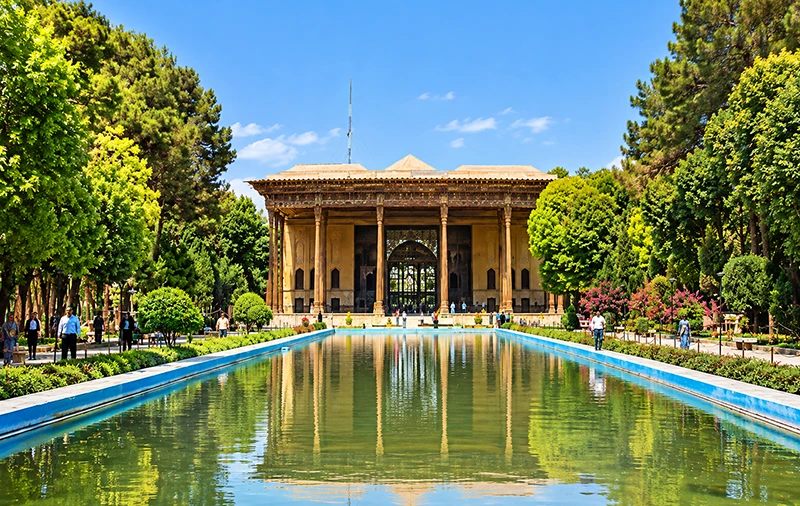
This stops suits travelers who enjoy both architecture and outdoor spaces. You can first examine the garden’s layout, then explore accessible palace interiors. Consequently, the visit adds variety to a sightseeing day.
Chehel Sotoun also provides a useful comparison with Fin Garden. Both connect water and architecture, yet the pavilion plays a particularly commanding role here. Notice how your view changes when you move away from the central path.
When planning Persian gardens on classic Iran tours, include this stop within your Isfahan sightseeing schedule. Moreover, avoid filling the day so tightly that the garden becomes merely a passage toward the palace.
Shiraz: Choose Eram Garden and Narenjestan Qavam
Eram Garden: The Main Garden Stop
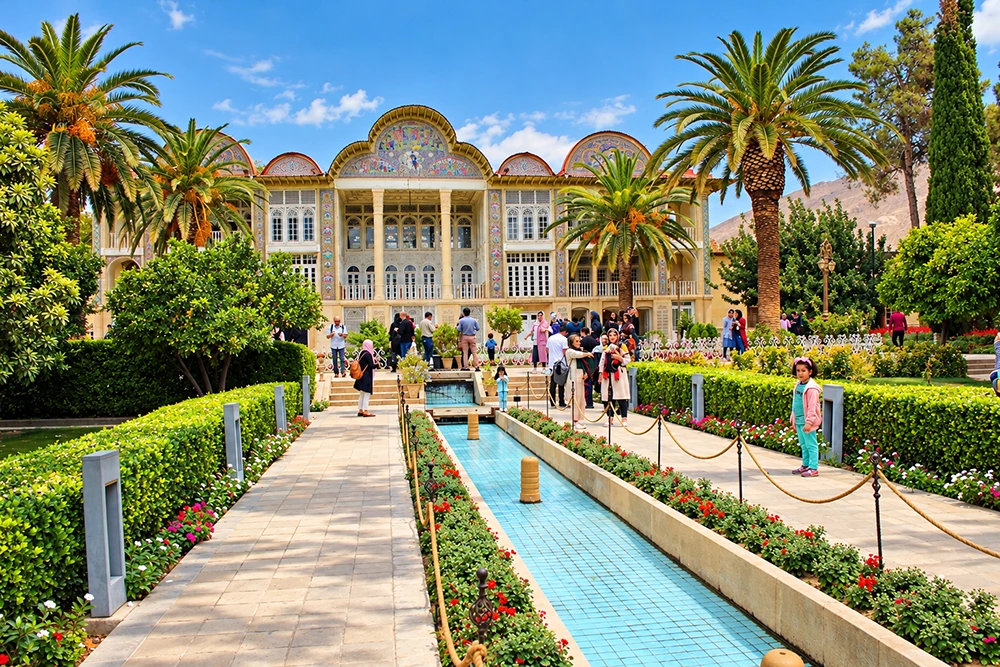
Eram Garden is a strong choice for travelers seeking an extended garden walk in Shiraz. Its trees, planted sections, pathways, and historic pavilion offer several points of interest. Moreover, its botanical character rewards visitors who enjoy plants alongside architectural details.
Begin with the main view toward the pavilion. Then, explore beyond that familiar photograph and follow the garden paths. Different perspectives help you appreciate the relationship between planting and formal design.
Eram belongs to UNESCO’s Persian Garden property. However, plan your visit around the grounds rather than assuming the pavilion’s interior will be accessible.
Narenjestan Qavam: An Additional Shiraz Visit
Narenjestan Qavam offers a more intimate house-and-garden experience. Orange trees and an ornamental building create a setting that differs from Eram. Therefore, the two visits can complement each other when your schedule allows.
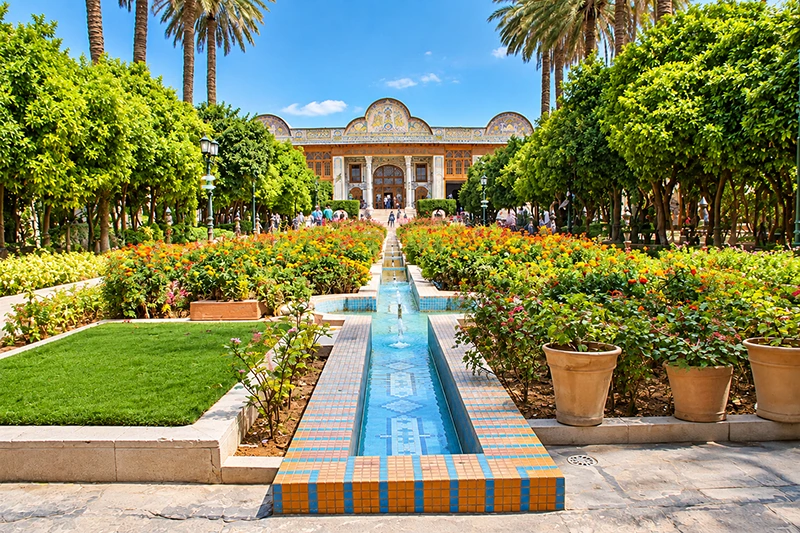
Spring may bring orange blossom, although flowering depends on seasonal conditions. Meanwhile, architectural details provide interest beyond the flowering period.
For travelers with limited time, prioritize according to personal interests. Choose Eram for a longer garden walk, or add Narenjestan for its house-and-garden setting.
How to Plan Your Garden Visits
Allow roughly 45–90 minutes per garden as a planning estimate. However, palace interiors, photography, and personal interests may require additional time. Confirm opening arrangements and included visits when reviewing your itinerary.
Spring generally offers fresh growth, while autumn can suit travelers who prefer milder sightseeing conditions. Nevertheless, planting, weather, and water features vary, so avoid expecting identical scenery throughout the year.
If you enjoy shared cultural experiences, browse our Iran small group tours and check each itinerary’s listed visits.
Before booking, identify which gardens matter most to you. Then, discuss how they fit around transfers and other sightseeing. A balanced schedule leaves room to appreciate each setting, ask questions, and enjoy the visit without watching the clock constantly.
Conclusion: Make Gardens Part of Your Classic Journey
Persian gardens on classic Iran tours add variety, historical context, and time outdoors. Fin, Dowlat Abad, Chehel Sotoun, and Eram form a rewarding selection across the route. Meanwhile, Golestan and Narenjestan offer additional perspectives. Explore our Iran private tours if you would like more flexibility when planning garden visits.
FAQ
Which UNESCO Persian gardens can you visit on this route
Fin Garden in Kashan, Dowlat Abad in Yazd, Chehel Sotoun in Isfahan, and Eram in Shiraz fit this route. Each belongs to UNESCO’s The Persian Garden property. However, check your selected itinerary because inclusion varies between tours.
Does Tehran have a Persian garden to visit
Golestan Palace offers a historic palace garden with pools and planted areas. However, its UNESCO listing is separate from The Persian Garden property. Visit the grounds alongside the palace sections included in your sightseeing program.
Are gardens visit included in every classic Iran tour
Yes, on the classic Iran tours, you will visit some of the Persian gardens to that specific cities.